

Drug and alcohol impairment remains one of the most preventable causes of serious workplace incidents in Australian mining and energy. According to Safe Work Australia, impairment-related incidents cost Australian businesses billions each year through lost productivity, equipment damage, legal proceedings and reputational harm. In industries where workers operate heavy machinery, manage pressurised systems and handle hazardous materials, the consequences of one impaired shift can be catastrophic.
Andatech has spent more than 20 years helping Australian organisations build practical, standards-compliant drug and alcohol testing programs. We have identified the five questions safety leaders across mining and energy are raising most often. We address each one with regulation-grounded guidance and practical solutions.
1. Is our current drug and alcohol policy still fit for purpose?
Many workplace drug and alcohol policies were written years ago and no longer reflect how organisations actually operate. Roles evolve, workforces become more blended, new substances emerge and testing technology improves. A policy that looked comprehensive when it was drafted may now contain gaps that expose the organisation to both safety incidents and legal challenge.
Under the Model Work Health and Safety Act, Persons Conducting a Business or Undertaking have a duty of care to manage risks to health and safety so far as is reasonably practicable. That duty explicitly includes managing hazards associated with drug and alcohol use. Australian regulators do not prescribe a single testing model. Instead, they expect a risk-based approach, meaning the policy must be proportionate to the level of risk present on each site.
A current policy should clearly define what "fit for duty" means in your workplace. It should specify which substances are covered, including prescription medications that may cause impairment. It should state who the policy applies to, covering employees, contractors, subcontractors and visitors without exception. It should outline when testing occurs, whether that is pre-employment, random, post-incident or based on reasonable suspicion. And it should explain what methods are used, what happens when someone returns a non-negative result and what support pathways are available.
Consistency is critical for operations with blended workforces. Fly-in-fly-out workers, rotating contract crews and agency staff may arrive on site under different employer policies. Applying a single, unified standard to everyone on site simplifies enforcement, reduces confusion and strengthens the organisation’s legal position. For a detailed walkthrough on refreshing your workplace approach, Andatech’s guide on updating your workplace drug and alcohol policy for 2026 covers the key steps.
2. Are we testing the right people at the right time with the right method?
A testing program that relies on a single method or a single trigger will leave gaps. The most effective programs layer multiple approaches to cover different risk scenarios: pre-shift screening at entry points, random testing during operations and targeted testing after incidents or when reasonable suspicion arises.
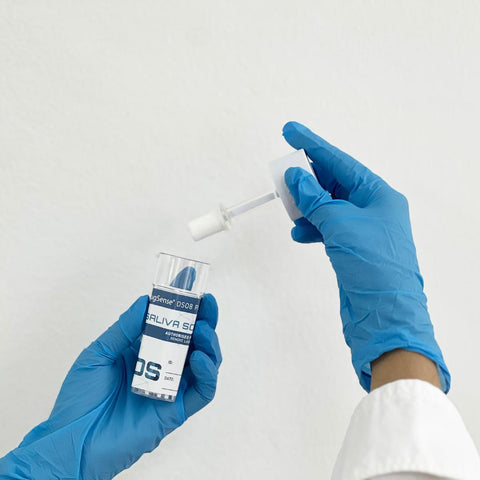
Choosing the right method for each scenario matters. Saliva testing detects recent drug use and is non-invasive, making it well suited to on-the-spot workplace screening where speed and minimal disruption are priorities. The DrugSense DSO8 Plus V3 is a saliva drug test kit that screens for eight drug groups plus alcohol, with results delivered in minutes. It is verified to comply with the Australian Standard AS/NZS 4760:2019, giving safety officers confidence that results meet nationally recognised thresholds. Urine testing, by contrast, has a longer detection window and is better suited to pre-employment checks or broader compliance screening where a wider timeframe of detection is needed.
Breath alcohol testing should be part of every site entry process. The Andatech Prodigy S is a portable workplace breathalyser certified to Australian Standard AS3547:2019. It is designed for regular or ad-hoc testing wherever it is needed on site. For operations requiring higher throughput, the Andatech Soberlive FRX is a wall-mounted breathalyser with facial recognition that verifies the identity of each person before they test. It can be integrated with existing access control systems to automatically grant or deny entry based on the result. All test data syncs to the Andalink cloud platform for centralised record keeping.
3. How do we handle multi-jurisdictional compliance across state and territory lines?
Mining and energy operations frequently span multiple Australian states, each with overlapping but distinct regulatory frameworks. A policy that satisfies the requirements in one jurisdiction may fall short in another. Safety leaders managing sites across state lines need to understand where the differences lie and build their programs to meet the highest applicable standard.
At the national level, the Model Work Health and Safety Act administered by Safe Work Australia sets the baseline. Each state and territory has adopted its own version of this legislation, often with local variations. In Western Australia, the Mines Safety and Inspection Act 1994 governs safety obligations for mining operations. In Queensland, the Coal Mining Safety and Health Act 1999 imposes strict requirements including zero tolerance for alcohol impairment in working areas and mandatory safety and health management systems to control alcohol-related risks. In the Northern Territory, the Work Health and Safety (National Uniform Legislation) Act applies. For the petroleum and energy sector specifically, the Australian Petroleum Production and Exploration Association (APPEA) publishes voluntary guidelines on impairment management that many operators use as a supplementary framework.
Regardless of the jurisdiction, all testing equipment should comply with the relevant national Australian Standards. That means AS/NZS 4308 for urine drug testing, AS/NZS 4760 for oral fluid (saliva) drug testing and AS 3547 for breath alcohol analysers. Using standards-compliant equipment is not optional. It is the foundation of a program that will withstand legal scrutiny if a result is challenged.
4. What does a defensible testing process look like if a result is challenged?
A positive drug or alcohol test that is not supported by a clear, documented process can be overturned. Cases heard at the Fair Work Commission have repeatedly shown that employers who rely on unconfirmed screening results, use uncalibrated equipment or fail to follow their own stated procedures risk having disciplinary actions reversed. The testing process matters just as much as the result itself.
Several elements distinguish a defensible program from a vulnerable one. The chain of custody for every sample must be documented from the moment it is collected. Testing officers should be trained and competent in the procedures they are applying. Equipment must be calibrated and certified according to the relevant Australian Standard, with calibration records maintained and accessible. Critically, a screening result alone should never be treated as a confirmed positive. Confirmation testing through an accredited laboratory is the step that gives a result the weight it needs to support disciplinary or legal proceedings.
Technology can strengthen defensibility at every stage. The DrugSense OraScan Saliva and Surface Drug Test Cassette V5, verified to AS/NZS 4760:2019, uses a barcode system that identifies each cassette and prevents the use of expired test materials. When paired with the DrugSense OraScan analyser, it enables digital result capture with photographic evidence, a built-in printer for on-the-spot records and secure data export via USB, Wi-Fi or 4G. Results are stored with the subject’s details and GPS location, creating a complete audit trail. The Andalink cloud platform extends this further by allowing safety managers to manage testing data across multiple sites and generate reports that are ready for regulatory review.
Andatech’s guide on keeping your testing program legally compliant provides a detailed walkthrough of the most common pitfalls and how to avoid them. For mining-specific guidance, the article on drug and alcohol testing in the mining industry covers compliance requirements and practical implementation steps.
5. How do we build a testing culture that workers trust rather than fear?
Testing programs that are perceived as punitive will face resistance. When workers see testing as a tool used against them rather than a measure designed to protect them, compliance becomes reluctant and reporting goes underground. The most effective programs are built on transparency, education and consistent application.
Integrating drug and alcohol education into site inductions and regular refresher training is the starting point. Workers need to understand why the policy exists, not just what happens if it is breached. When the reasoning is framed around protecting individuals, their colleagues and the critical infrastructure they work with, the conversation shifts from enforcement to shared responsibility. Annual or biannual refresher sessions keep the message current and help embed it into everyday site culture.
Support pathways are equally important. A policy that outlines consequences without offering any avenue for rehabilitation or assistance will struggle to build trust. Providing access to employee assistance programs, allowing self-reporting without automatic termination and making it clear that the goal is to help workers return to fitness for duty sends a strong signal about the organisation’s values.
The testing method itself plays a role in worker acceptance. Portable, non-invasive options such as saliva drug test kits and contactless wall-mounted breathalysers reduce friction. When testing is visible, routine and applied consistently across every level of the workforce, it becomes a normal part of arriving on site rather than an adversarial event. Making self-testing available so that workers can check their own status before presenting for a formal test is another practical step that supports personal accountability.
See these solutions in action
These five questions represent the conversations happening right now across mining and energy boardrooms, safety meetings and operational planning sessions. Answering them well requires more than good intentions. It requires practical tools, compliant equipment and a clear understanding of the regulatory landscape.
Take the next step: Request a free on-site consultation


